Key takeaways
- A salon wash cleans your hair. A head spa treats your scalp: diagnosis, deep pore cleansing, exfoliation and steam.
- Magnifying scalp cameras reveal what the naked eye can't: oil plugs, flakes, redness and strand condition.
- Head spa therapists use acupressure-based massage rather than a quick lather.
- The environment is designed for deep relaxation, not speed.
Most of us have had a lovely shampoo at the hairdresser: a few minutes of lather, a bit of a rub, a rinse, then off to the chair for your cut or colour. It's pleasant, but it's a preparation step for the main event.
At a Japanese head spa, the scalp is the main event. Everything, from the tools to the training to the lighting, is built around one goal: a healthier scalp and a calmer mind. Here's how the two compare, step by step.
Hair wash vs scalp therapy
| Salon hair wash | Japanese head spa | |
|---|---|---|
| Purpose | Prep hair for cutting or styling | Treat and rebalance the scalp |
| Diagnosis | ✕ None | ✓ Magnified scalp analysis |
| Cleansing | Surface shampoo, one or two lathers | Deep pore cleansing, gentle exfoliation, micro-mist steam |
| Massage | A brief scrub, a few minutes | Extended shiatsu-based pressure-point massage |
| Rinse | Handheld sprayer | Water halo cascade |
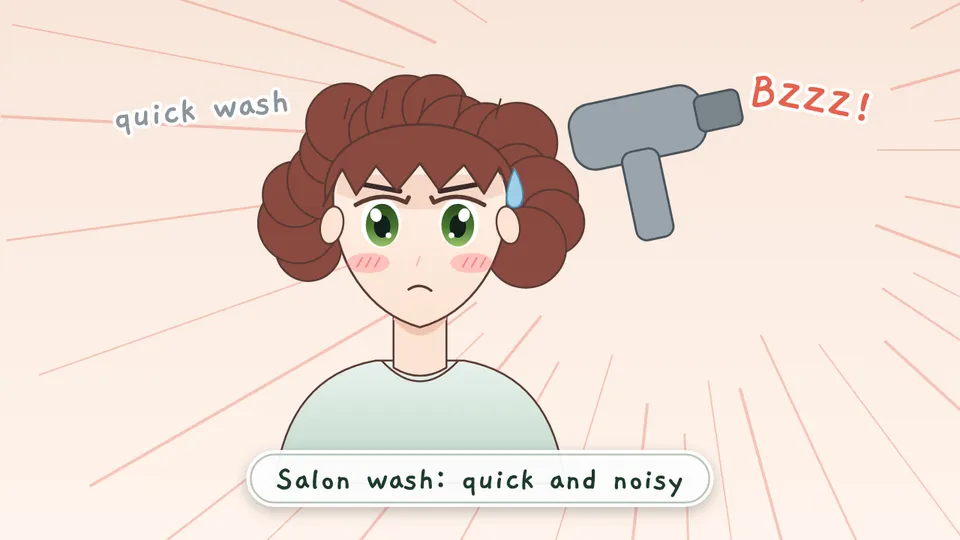
| Environment | Busy, bright, music, hairdryers | Quiet, dim, sensory-calm |
| Result | Clean hair | Clean scalp, lighter roots, deep relaxation |
Diagnostic tools: seeing what's really there
You can't treat what you can't see. Most scalp problems, including oil plugs around follicles, fine flaking, redness, and thin or damaged regrowth, are invisible from arm's length. That's why a Japanese head spa begins with a magnifying scalp camera, often capable of 50–200× magnification.
Zoom into your scalp
Drag to magnifyIllustration. At high magnification, oil build-up (yellow), flakes (white) and strand thickness become easy to see.
Seeing your own scalp on screen, before and after, is one of the most memorable parts of the experience. It also means your treatment can be tailored to what your scalp actually needs, not a one-size-fits-all routine.
Therapeutic focus: trained hands
A salon shampoo is usually done quickly by a junior team member between clients. A head spa massage is a skill in its own right, rooted in shiatsu and acupressure. Therapists learn the anatomy of the scalp, neck and shoulders, including the pressure points at the base of the skull, the temples and the crown, and how to work them slowly and deliberately.
Pressure-point technique
Targeted, sustained pressure releases tension in the galea, temples and occipital ridge.
Time to work
Not rushed between appointments. The massage is the treatment, not a warm-up.
Scalp literacy
Therapists read your scalp's condition and adjust products and pressure to suit.
Whole-body calm
The goal includes nervous-system relaxation, not just clean hair.
Learn more about why this works in how a head spa relieves tension headaches.
Environment and atmosphere
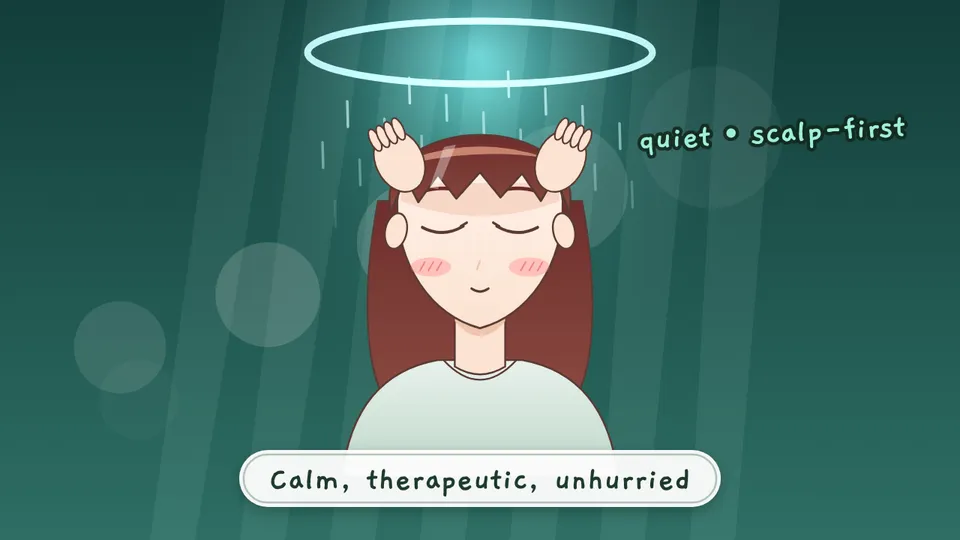
Salons are social, lively places, and that's part of their charm. But blow-dryers, chatter, music and chemical smells don't make it easy to relax. A head spa is designed as a calm sensory environment.
The sound of the room
Illustrative sound levelsWhen to choose which
Choose a salon when…
You need a cut, colour, blow-out or style for an event. Salons are the experts in how your hair looks.
Choose a head spa when…
You have oiliness, flakes, itch, build-up, thinning worries, stress, headaches or jet lag, or you simply want deep relaxation.
Book a head spa a few days before a cut or colour appointment. Your stylist gets a clean, balanced canvas, and colour and styling tend to look better on a healthy scalp.
Choose dedicated scalp expertise
Your hairdresser and your head spa therapist are both specialists, just in different things. If your scalp needs care, see a scalp specialist. We're in Seminyak, easy to reach from Canggu, Legian, Petitenget and Kerobokan. Comparing other options too? See head spa vs Balinese creambath.