Key takeaways
- A Japanese head spa focuses on the scalp: cleansing follicles, balancing oil, improving circulation and calming the nervous system.
- A Balinese creambath focuses on the hair lengths: a rich conditioning cream massaged in, often with a shoulder massage.
- Choose a head spa for build-up, oiliness, thinning worries, stress or jet lag. Choose a creambath for instant softness on dry ends.
- Many Seminyak and Canggu locals alternate between the two through the year.
Walk down any street in Seminyak and you'll see "creambath" on spa menus. It's one of Indonesia's best-loved beauty rituals, and with good reason. More recently, a new name has joined it: the Japanese head spa. Both involve lying back while someone massages your head, and both leave you feeling wonderful. So what's the real difference, and which should you book on your Bali trip?
The short answer: a creambath conditions your hair, while a Japanese head spa treats your scalp. That one difference shapes everything else: the products, the technique, the equipment and, most importantly, the results.
What is a Balinese creambath?
A creambath (krimbat) is a traditional Indonesian hair treatment. A thick, nourishing cream, often made with ingredients such as avocado, aloe vera, ginseng or candlenut, is worked through the hair and massaged into the head. It is usually left under a warm towel or steamer, then rinsed out. Many versions include a relaxing neck, shoulder and arm massage.
It's soothing, deeply moisturising and a lovely cultural experience. Its main focus is the hair shaft: smoothing the cuticle and leaving lengths soft and manageable straight away.
What is a Japanese head spa?
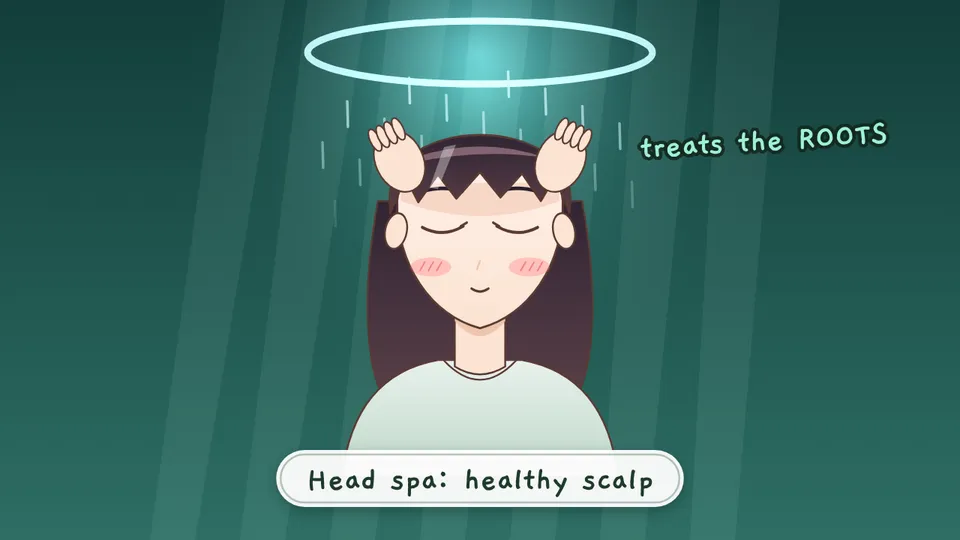
A Japanese head spa starts at the other end, at the root. It usually begins with a magnified scalp analysis, then uses micro-mist steam, deep pore cleansing and gentle exfoliation to clear the build-up of oil, sunscreen, sweat and product that clogs follicles. A slow, shiatsu-style massage works the scalp's pressure points. The ritual ends with a soothing water halo rinse and a final scalp check.
The aim is a healthy, balanced scalp. That is the foundation for stronger, shinier hair over time, and the slow massage brings deep nervous-system relaxation.
Side-by-side comparison
| Feature | Japanese head spa | Balinese creambath |
|---|---|---|
| Main focus | Scalp health and follicle detox | Hair-shaft conditioning |
| Diagnosis | ✓ Magnified scalp analysis | ✕ Usually none |
| Steam | Fine micro-mist to open pores | Warm towel or hood steamer |
| Massage style | Shiatsu pressure points on the scalp | Cream massage plus neck and shoulders |
| Rinse | Water halo cascade | Standard basin rinse |
| Best for | Oiliness, build-up, flakes, thinning worries, stress | Dry, frizzy or coarse lengths |
| Results | Lighter roots, volume, long-term scalp balance | Instant softness and shine |
| Feel | Meditative, sensory, very calming | Nurturing, traditional, cosy |
Which one suits you?
Choose your main concernDeep pore cleansing and steam clear away excess oil and the sunscreen and sweat that build up in Bali's humidity.
A creambath gives fast softness to dry lengths. If your scalp is also tight or flaky, start with a head spa to fix the root cause.
Slow shiatsu pressure on the scalp, temples and base of the skull is one of the most calming treatments you can book.
Steam, massage and the water halo help ease flight fatigue and brain fog. A favourite first-day ritual.
Clear follicles and better circulation give hair the best environment to grow. It works best as an ongoing routine.
A creambath is a classic Indonesian ritual, and a Japanese head spa is a modern, sensory one. Many visitors love having one of each.
Technique and technology
The biggest practical difference is in the tools. A creambath is entirely hands-on: cream, massage, warmth. A Japanese head spa adds a few gentle technologies:
Scalp analysis
A magnifying camera shows pores, oil and strand condition before and after, so you can actually see the difference.
Micro-mist
Ultra-fine warm mist softens hardened oil and opens follicles more evenly than a towel.
Shiatsu technique
Targeted pressure points rather than broad strokes, for deeper release of tension.
Water halo
A ring of warm water that rinses thoroughly and calms the mind at the same time.
Results: instant softness vs long-term balance
A creambath gives you that immediate "silky hair" feeling, which is perfect if your ends are crunchy from sun and sea. Because it adds richness, though, people with oily scalps sometimes find their roots feel heavier a day or two later.
A head spa gives you a different kind of result: lighter roots, more volume and a fresh, clean scalp feeling that lasts. Over repeated sessions, a well-balanced scalp tends to produce healthier, shinier hair. That's why many expats in Seminyak and Canggu book a head spa every few weeks as part of their routine. You can read more in the secret to glossy hair.
Spending two weeks or more in Bali? Book a Japanese head spa early in your trip to reset your scalp, then keep your ends hydrated with a good leave-in conditioner.
The verdict
There's no wrong choice. Both are wonderful ways to spend an afternoon in Seminyak. But if you're dealing with oily roots, flakes, an itchy scalp, hair that looks flat, tension headaches or post-flight exhaustion, a Japanese head spa gets to the root of the problem, quite literally. If your scalp feels great and you just want silky ends, a creambath is a beautiful, traditional treat.
New to head spas? Our step-by-step guide to what to expect walks you through every stage.